
Blog Posts
Hidden in Plain Sight: The Cave Chapel of Agioi Eptapedes in Santorini’s Caldera
Jul
While millions of visitors gaze across the caldera from the whitewashed footpaths of Oia, few ever notice one of the island’s most extraordinary architectural treasures. Tucked inside a dramatic sea cave at the foot of towering volcanic cliffs lies the tiny church of Agioi Eptapedes, also known as the Church of the Seven Holy Youths.
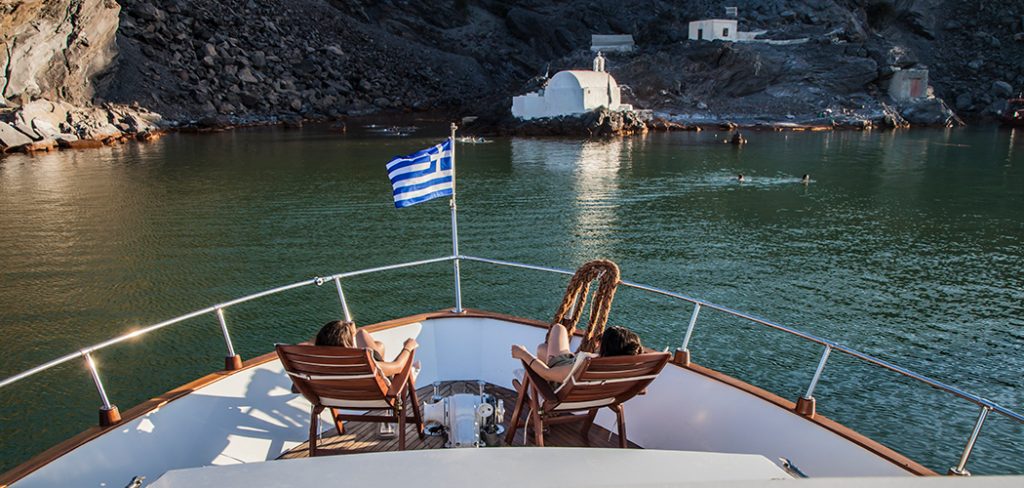
Perched just above the waterline in Mouzakia Bay, this isolated chapel offers a rare glimpse into Santorini’s deeply personal relationship with the Aegean Sea, far removed from the bustling sunset viewpoints above.
Architecture Born of Solitude and Rock
Built over two centuries ago, Agioi Eptapedes ranks among the oldest surviving ecclesiastical structures in the parish of Oia. Its location was not chosen by chance. Reaching the site from land is impossible due to the vertical volcanic cliff face, meaning access is strictly limited to the sea.
The physical environment mirrors the sanctuary’s spiritual dedication. According to Christian tradition, the Seven Sleepers of Ephesus, Maximillian, Yamvlichos, Martinian, Dionysios, Antoninos, Konstantinos, and Exakoustodianos, sought refuge inside a cavern to escape Roman persecution during the reign of Emperor Decius in the 3rd century AD. By building this sanctuary inside a cave carved by nature, the 19th-century builders created a physical sanctuary mirroring that ancient refuge.
For generations, local fishermen navigating the caldera waters have maintained a tradition of stopping at Mouzakia Bay to light the oil lamps, burn incense, and pay homage to the icon of the Seven Youths before heading out into open water.
The Gathering at Eptapedes
The sanctuary comes alive during its annual feast day, honoring the memory of the Seven Youths. While visitors often hear about early August gatherings beginning around August 2nd, the formal liturgical feast falls on August 4th, marking the Dormition of the Saints in the Orthodox calendar.
Because of the extreme geography, the annual panigyri (festival) involves multi-day preparations. Festivities kick off as early as August 2nd, when local families begin cleaning the cave grounds and transporting cooking gear down to Armeni Bay. On August 3rd, the eve of the feast, decorated fishing boats decorated with flags ferry residents across the water to hold Vespers. Historically, locals from Oia would travel over the night before, laying out blankets to sleep directly on the cave’s narrow pebble shore.
The Experience: Joining the Pilgrimage
For travelers fortunate enough to witness the festival in early August, the experience reveals a side of Santorini rarely seen in guidebooks. Small boats adorned with Greek flags depart from Ammoudi and Armeni, transporting villagers across calm caldera waters.
After liturgy, attendees gather along the narrow strip of beach outside the cave mouth to share wine, fresh fish, and traditional stews, celebrating a centuries-old community tradition that remains entirely uncommercialized.