Santorini Wine
© Konstantina Sidiropoulou
The Unique Volcanic Terroir of Santorini Vineyards
The cultivation of the vine in Santorini goes back 3.500 years ago. Findings from the excavations of the prehistoric town of Akrotiri show that vine cultivation, wine making and wine trade were the habitants’ important activities.
Vine is an easily adaptable and particularly tenacious plant. It is among the very few plants that managed to survive for centuries in the inhospitable environment of Santorini. It possesses a rich and strong system of roots that penetrate the solid soil of the volcanic ash.
Assyrtiko: The Flagship Grapε
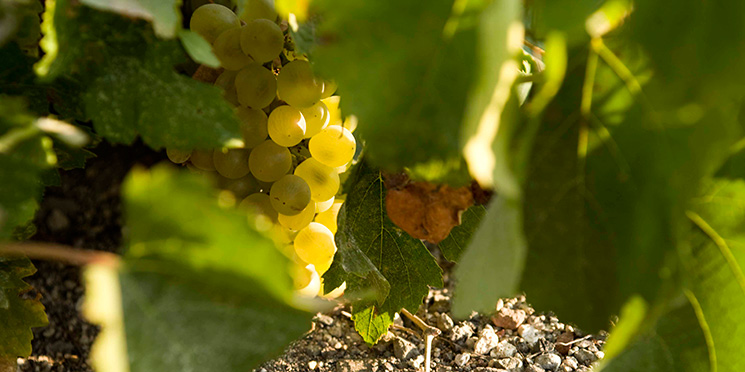
The Santorini wine reflects the pure character of the variety, the micro-climate and the volcanic soil. High acidity, intense minerality and citrus flavours upfront are the key elements creating the complex character of Assyrtiko, highlighting the Santorinian earth in perfect harmony.
The main local grape varieties (Assyrtiko, Aidani, Athiri, Mavrotragano, Mantilaria) produce high-quality wines that fully express Santorini’s unique ecosystem.
The famous wine of Santorini is Assyrtiko, which dominates the vineyards on the island. The over century-old vines of Santorini find their best expression in the Assyrtiko grape by giving world-class wines.
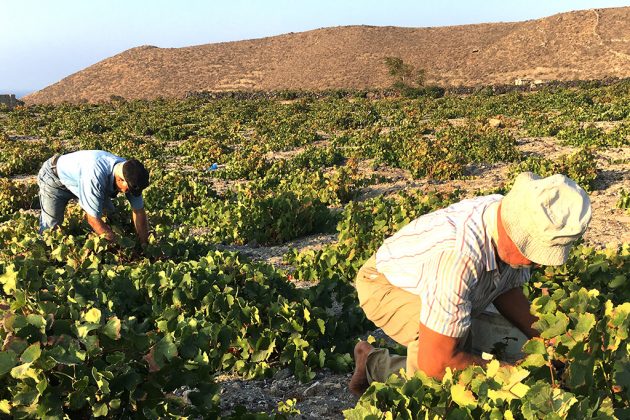
Farmers work diligently harvesting crops under the warm sun. Rolling hills stretch across the background.
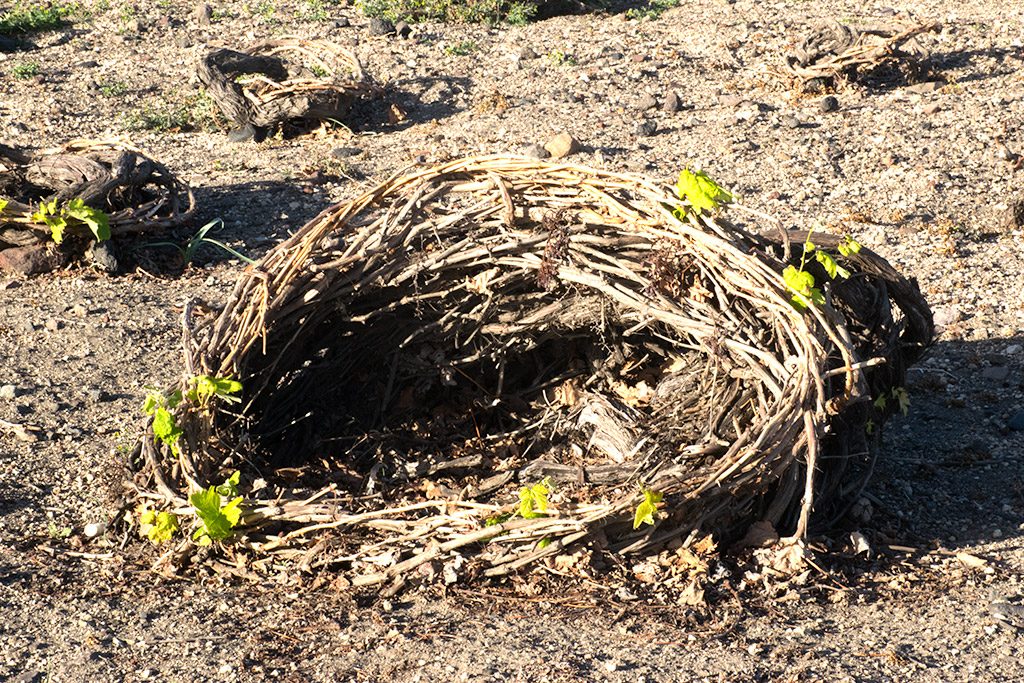
New life emerges from a pruned grapevine in early spring. Fresh green shoots sprout from the weathered wood.
Why are Santorini vines grown in baskets? The Kouloura method.
The “Meltemi” (strong north winds) and the scorching sun would destroy upright vines. To combat this, growers use a unique pruning technique called Kouloura (pronounced koo-LOO-rah).
The word Kouloura literally translates to “round cake” or “coil.” To create it, a vine dresser takes the long, flexible canes of the grapevine and wolves it into low-lying, basket-shaped wreaths. By keeping the vines in a low, heavy basket, the center of gravity remains at ground level, and the outer “walls” of the basket act as a windbreak for the delicate clusters growing inside.
The grapes grow on the inside of the basket, protected from wind and sand-blasting, while the leaves provide a canopy against the sun. As the years pass, the vine stays low to the ground. Every year, the new growth is woven into the existing circle, making the basket thicker and sturdier.
Visit the wineries of Santorini - Wine tasting
Today, there are eighteen (18) operating wineries in Santorini. Apart from the wine making process that takes place in their facilities, most of the local wineries offer to visitors a wine tasting experience. We definitely encourage our visitors to enjoy a wine tasting experience and discover the wineries of Santorini.
Choose and locate a winery (or even more than one) that you would like to visit, find out the open hours of its facilities, drive there or arrange a transfer with the reception of your hotel. If you wish to leave it on a specialist, you could simply select one of the private or semi private wine tours available here.
Right below, you will find a list of the Santorini wineries, organized in alphabetic order. Our e-shop offers a full list of all the Santorini wines and we ship worldwide or to your holiday hotel/villa in Santorini. To do so, follow the link right next to a winery’s name or click here for a full catalogue of all wineries and their available wines.
Wineries
- Akra Chryssos buy now
- Anhydrous buy now
- Estate Argyros buy now
- Gaia Wines buy now
- Gavalas buy now
- Hatzidakis buy now
- Artemis Karamolegos buy now
- Kasteli buy now
- Koutsoyannopoulos buy now
- Mikra Thira buy now
- Canava Chryssou Tselepos buy now
- Canava Roussos buy now
- Oeno P – buy now
- Santo Wines buy now
- Domaine Sigalas buy now
- Vassaltis buy now
- Venetsanos buy now
- Volcanic Slopes Vineyards buy now
Read more: