
Blog Posts
Floating in the Sky: The Magic of Santorini’s Caldera Fog, Anedossa (video & photos)
Jun
Santorini is world-famous for its dramatic volcanic cliffs, stark white villages, and deep blue Aegean waters. But a few times a year, lucky travelers witness a rare transformation that turns the island into something straight out of a myth.
The sea disappears, the volcanic crater fills with a blanket of white, and cliffside villages like Oia and Fira look like they are floating entirely in the sky.
In English, we call this stunning natural event sea fog or caldera fog. However, if you ask the locals, they will introduce you to it by its ancient, poetic Greek name: “Anedossa” (also spelled Anedousa).
How the Anedossa Phenomenon Works
While it looks like pure magic, the Anedossa is actually a fascinating meteorological event.
The Science: Advection Fog
Scientifically, the Anedossa is a type of advection fog (or horizontal transport fog). Unlike normal ground fog that rolls in overnight, advection fog forms when warm, moist air moves horizontally over a significantly colder surface.
In Santorini, this happens due to a sharp temperature contrast:
-
The Warm Land: The dark, volcanic rock of the Santorini crescent absorbs intense solar heat throughout the day.
-
The Cool Sea: The deep waters of the Aegean Sea trapped inside the massive sunken caldera basin remain quite cool.
When the warm, humid air radiating off the volcanic land collides with the chilly air hovering right above the caldera water, the moisture instantly condenses.
The Surreal Appearance
Because the caldera behaves like a massive volcanic bowl, the fog gets trapped inside the basin. It creates a dense, low-lying sea of clouds or a thick, slowly rolling white smoke.
On its thickest, from the walking paths of Fira, Imerovigli, or Oia, the view is spectacular. The sea is completely blotted out, leaving only the rugged cliff edges and the iconic blue-domed churches peaking out above a fluffy white abyss.
Watch the Anedossa Roll In a Timelapse Video
The way the Anedossa moves is highly dynamic. It can fill the caldera in a matter of minutes, completely changing the landscape before burning off just as quickly under the afternoon sun.
Check out our live-camera timelapse below to see this breathtaking phenomenon in action – early in the morning and then again in the beginning of the evening at around 9-10pm.
Over the years our lenses have captured several moments of this phenomenon. Enjoy some of these in the pictures below:
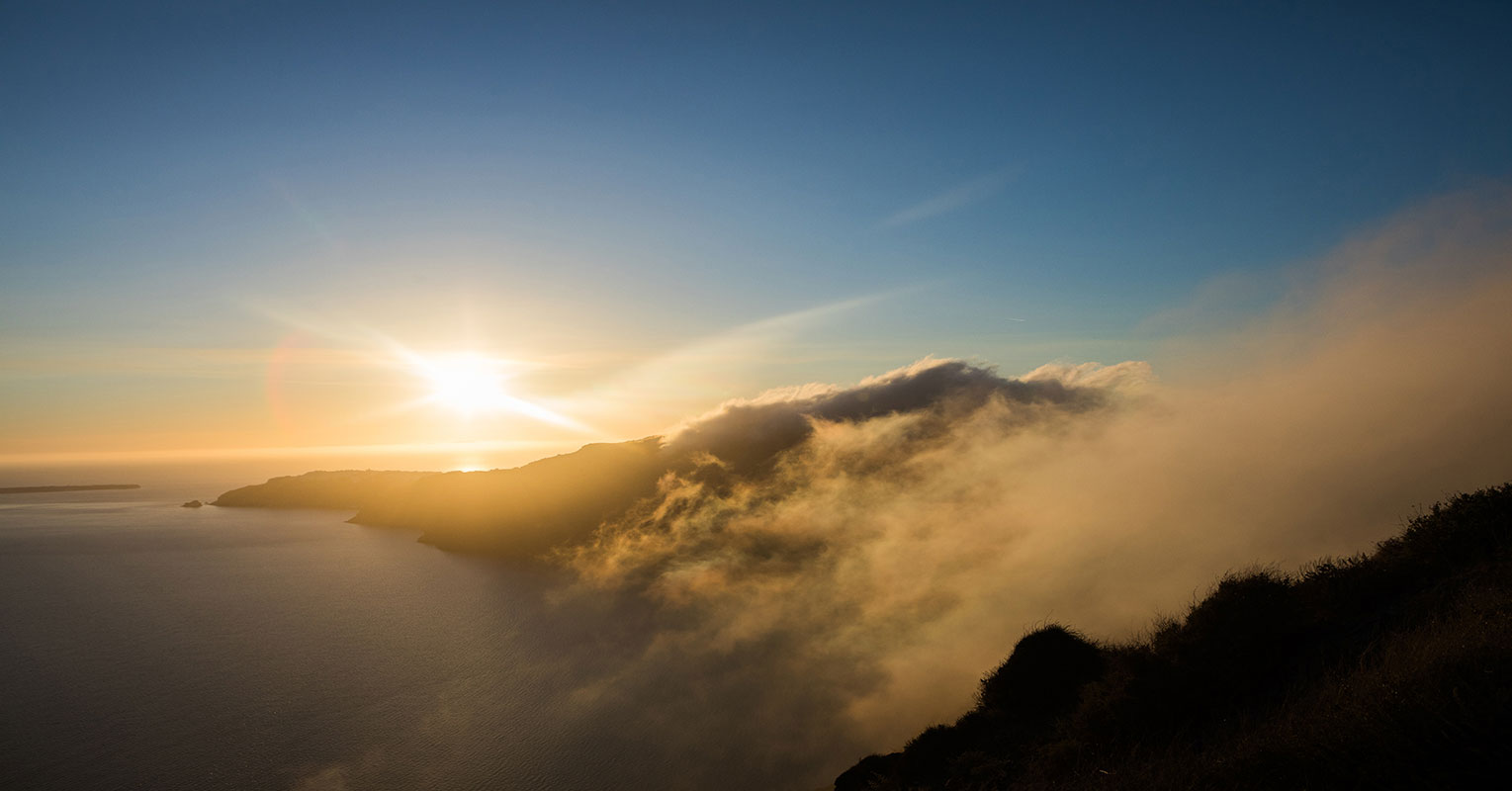
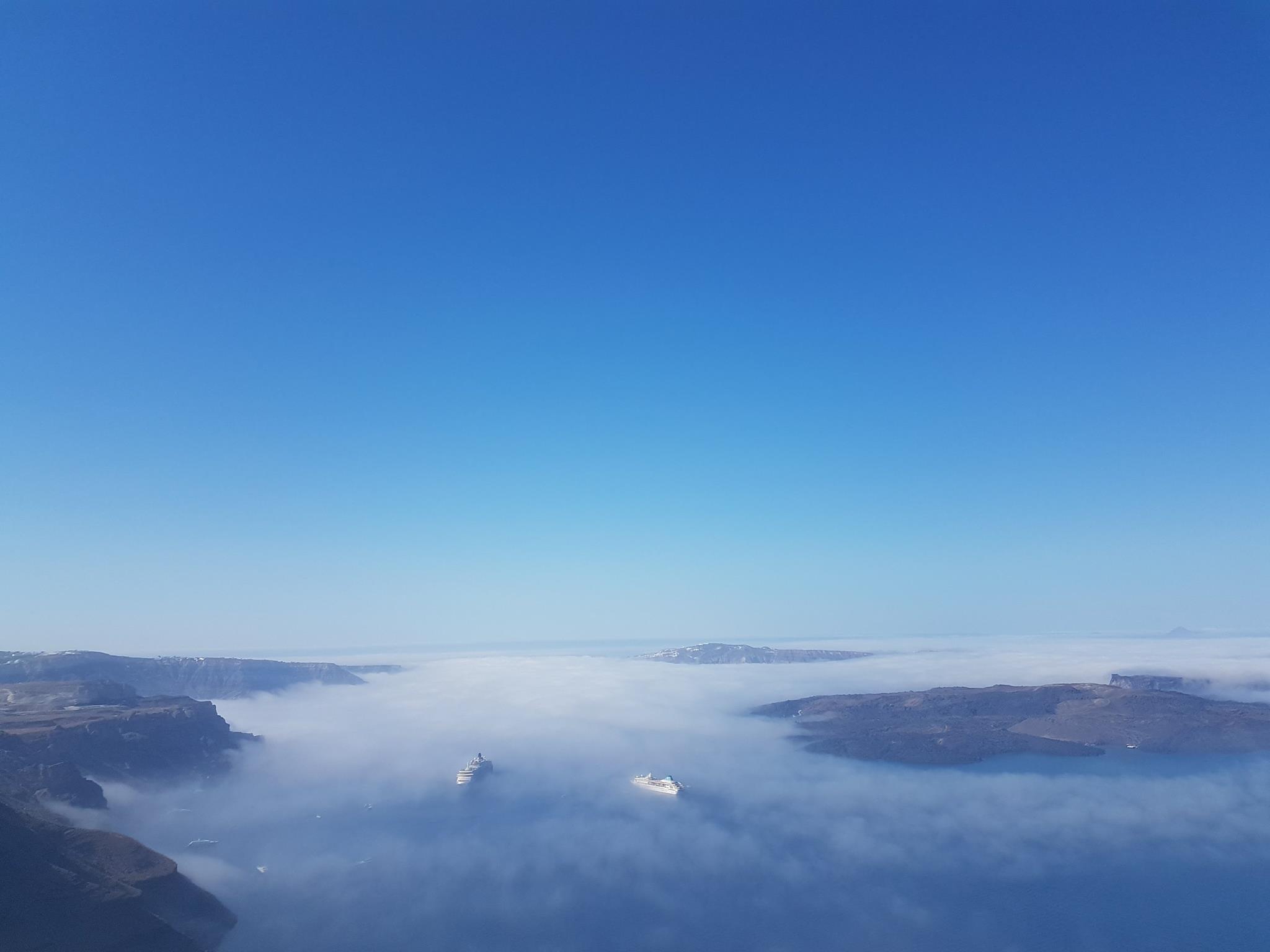
Cruise ships glide through a misty coastal caldera under a vast blue sky. The scene feels calm and almost otherworldly.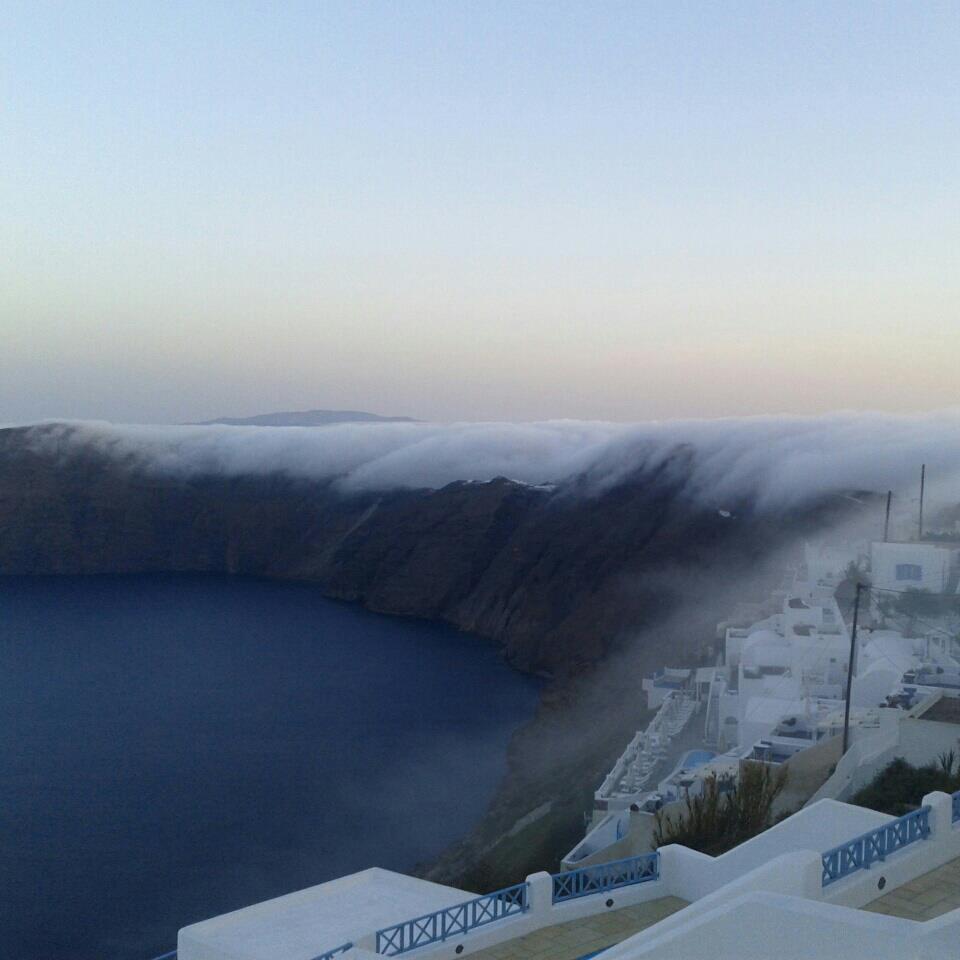
Mist cascades over dramatic seaside cliffs at dusk. Whitewashed buildings overlook the calm blue water below.
When Can You See the Santorini Sea Fog?
If witnessing the Anedossa is on your travel bucket list, timing is everything.
This phenomenon is most common in the spring, especially during the month of May.
During this shoulder season, daylight temperatures on the island begin to climb rapidly into warm, humid summer territory, while the Aegean Sea is still retaining its chilly winter temperatures. This creates the perfect atmospheric recipe for the temperature clash required to spawn the fog. It usually occurs in the early morning hours and dissipates by midday as the sun warms the sea surface.
If you are visiting Santorini in the spring, keep your camera ready at dawn, you might just catch the island at its most mystical.