

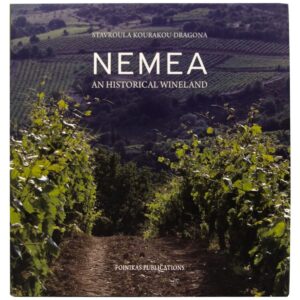

Nemea, An Historical Wineland


€ 30.00 incl. VAT
Currency conversions are provided for informational purposes only. Checkout is done in EURO.
by Stavroula Kourakou-Dragona
Publisher: Foinikas (2012)
Format: Clothbound hardcover
Pages: 180
Dimensions: 23×25cm
ISBN: 978-960-6849-28-2
Stavroula Kourakou’s book “Nemea: An Historical Wineland” is composed of self-contained narrative texts that explore the history, mythology, folklore, and viticulture of the region of Nemea, long regarded as the “wine capital” of the Peloponnese.
2 in stock
Estimated shipping date: 29 Oct 2026
Nemea, An Historical Wineland
by Stavroula Kourakou-Dragona
Publisher: Foinikas (2012)
Format: Clothbound hardcover
Pages: 180
Dimensions: 23×25cm
ISBN: 978-960-6849-28-2
Description
Stavroula Kourakou’s book “Nemea: An Historical Wineland” is composed of self-contained narrative texts that explore the history, mythology, folklore, and viticulture of the region of Nemea, long regarded as the “wine capital” of the Peloponnese.
Through these narratives, the book reveals Nemea as a truly historical “wineland,” a region that has produced renowned wines uninterruptedly from antiquity and Byzantine times to the present day, regardless of whether the area was under Frankish, Ottoman, or Venetian rule during the Middle Ages.
In Homeric epics, the region appears as Arithyrea, described as erateini (charming and alluring). In historical times it was known as Phliasia, producing the celebrated Phliasian wine from the Phliasian vine. During the Middle Ages, the area took the name Agios Georgios, and the Phliasian vine became known as Agiorgitiko, the grape variety still cultivated today across the winelands of Nemea, its official name since 1923.
Thanks to the exceptional potential of the Agiorgitiko variety, the region’s unique soil and climate conditions, and its long cultural heritage, the name Nemea was officially recognized in 1971 as an Appellation of Origin for dry red wines produced exclusively from this native grape. Today, Agiorgitiko is cultivated across the winelands of 17 communities that form the Protected Designation of Origin (PDO) Nemea zone.
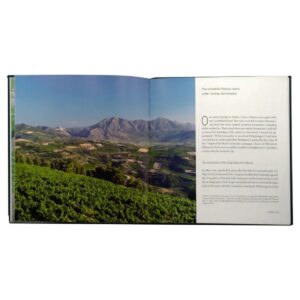
Within the lush vineyard landscape of modern Nemea stand the remaining nine columns of the once magnificent Temple of Nemean Zeus in Ancient Nemea, where the Nemean Games, one of the four Panhellenic athletic festivals, were held. Archaeological sites (the sacred grove, the museum, the stadium) and contemporary winelands form the two pillars of the region’s historical and economic life, with its state-of-the-art wineries producing one of the finest products of Greek agriculture.
The book is bound in cloth with thermographic printing and includes a protective dust jacket.
Related Products